
Pickleball Coordination App
Designing the shortest path from “I want to play” to playing.
Players don’t need another pickleball app. They need less work finding and coordinating a good game.
- Role
- Product Strategy, Research, UX/Product Design, AI Strategy
- Product
- Mobile app
- Status
- In development
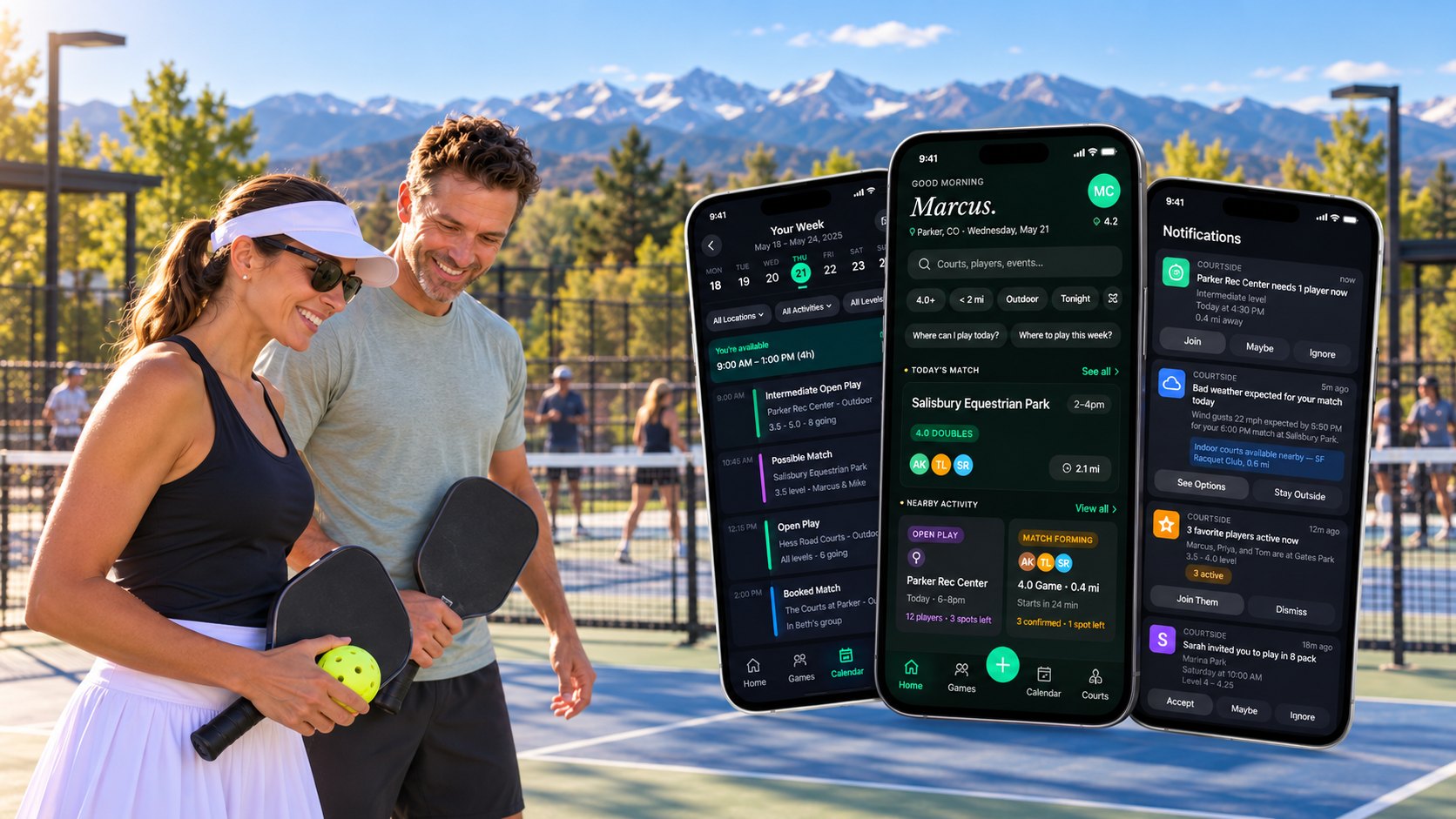
- ~75
- player conversations + interviews
- 10/11
- survey respondents use group texts to coordinate
- 8/11
- use multiple pickleball apps/services
- ~15
- formative concept reviews
01 · Learn
Plenty of tools. Players still piece the game together themselves.
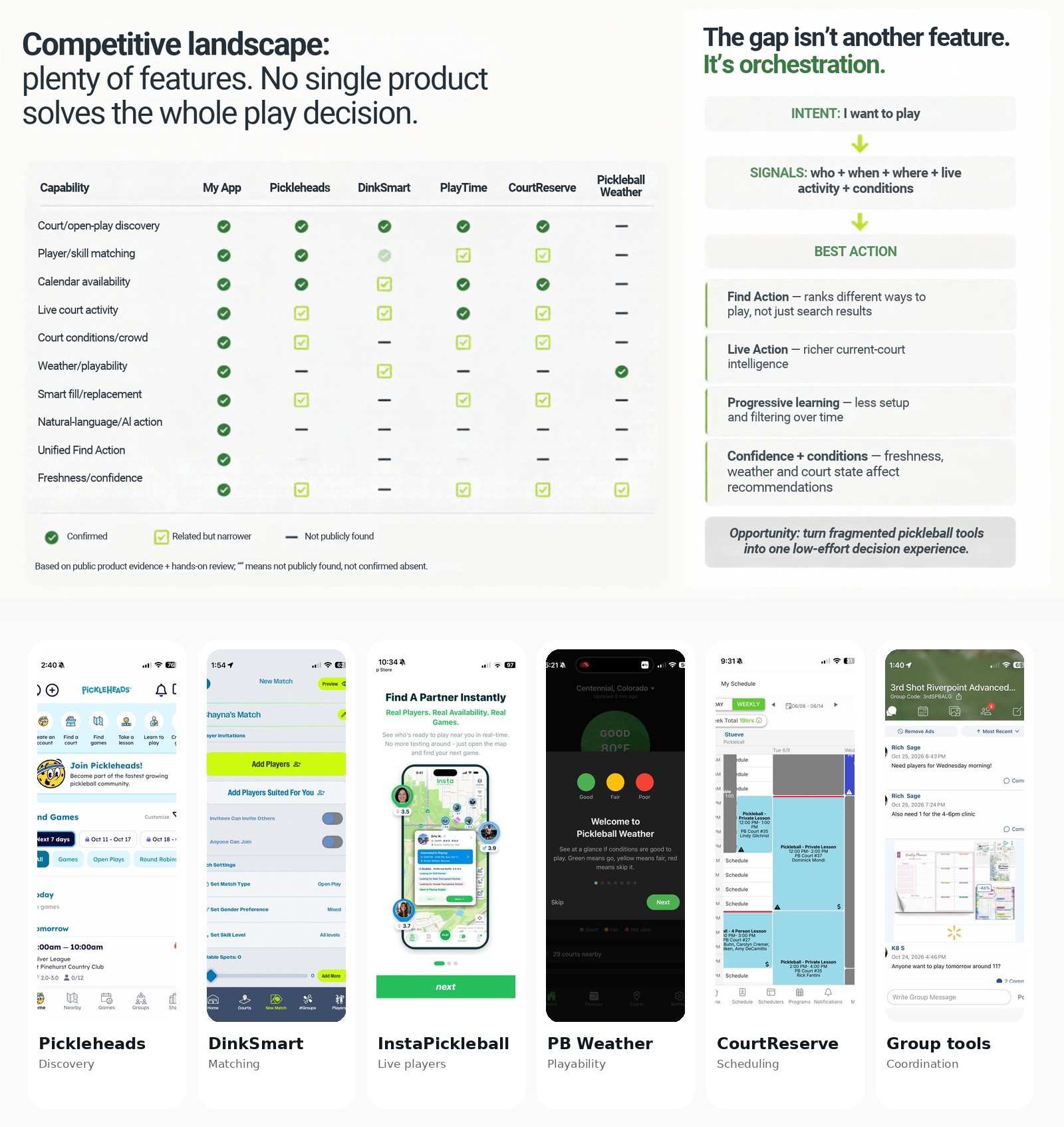
Interviews, survey data and competitor reviews all pointed to the same thing: finding play and coordinating it still takes too much work.
Group texts still dominate.
10 of 11 survey respondents use them to coordinate.
Players juggle systems.
Groups, court apps, schedules, weather and ratings live in different places.
The market is fragmented.
Competitors solve useful slices, but the player still puts the pieces together.
02 · Define
The problem is finding + coordinating.
A good game only happens when the right people, time, place, fit and conditions line up. The direction became: reduce the work between wanting to play and actually playing.
- Who
- When
- Where
- Fit
- Conditions
03 · Design
Make the system do more of the work.
The early screens were built for function and flow testing, not final visual polish. Final visual design is still in progress.
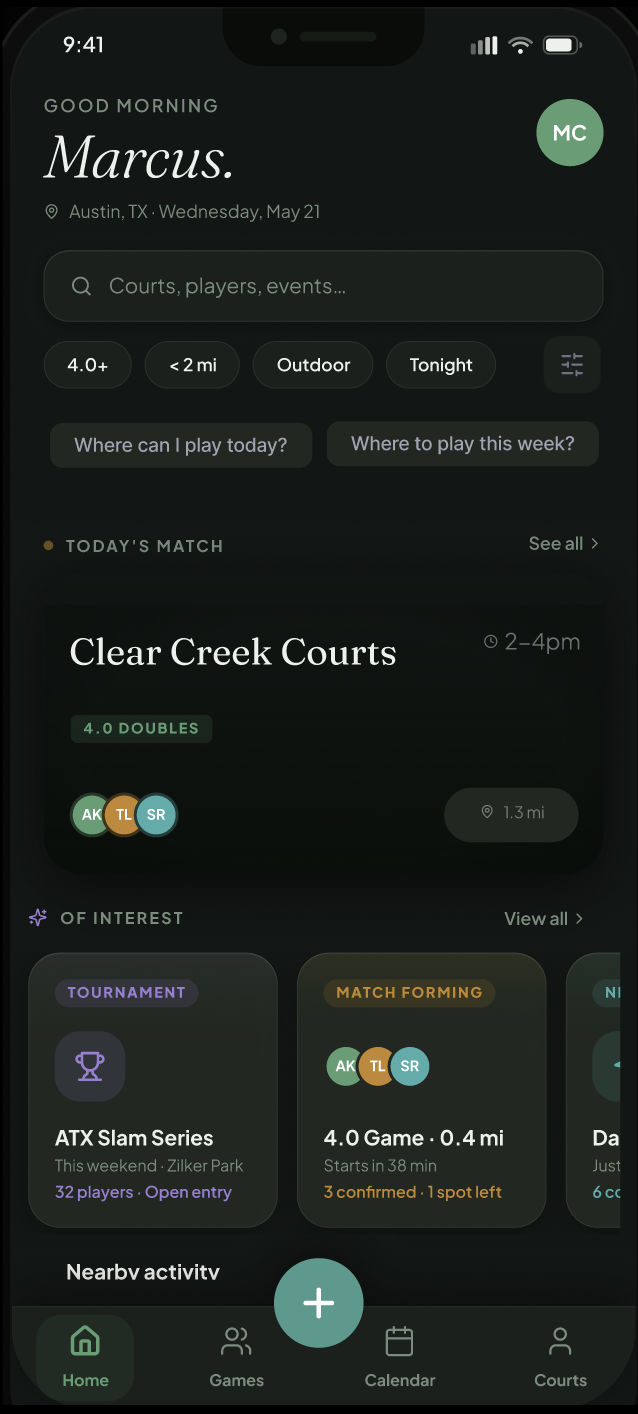
Surface what matters now
Relevant play and activity instead of another search list.
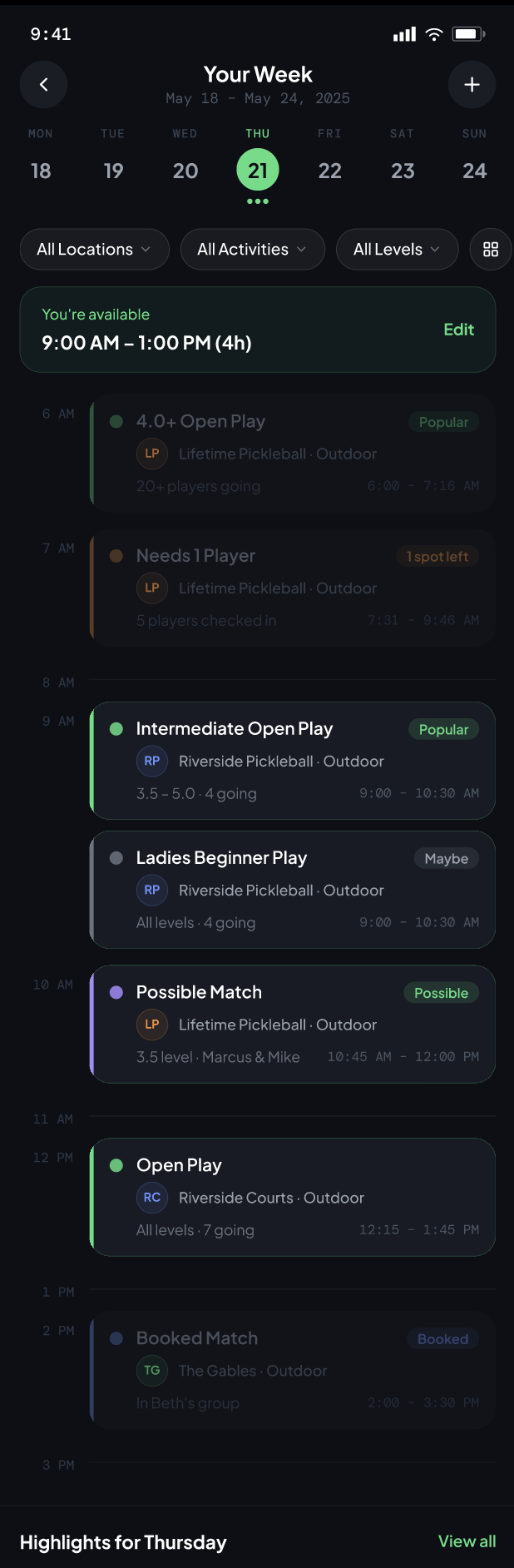
Make availability useful
See play around when someone can actually play.
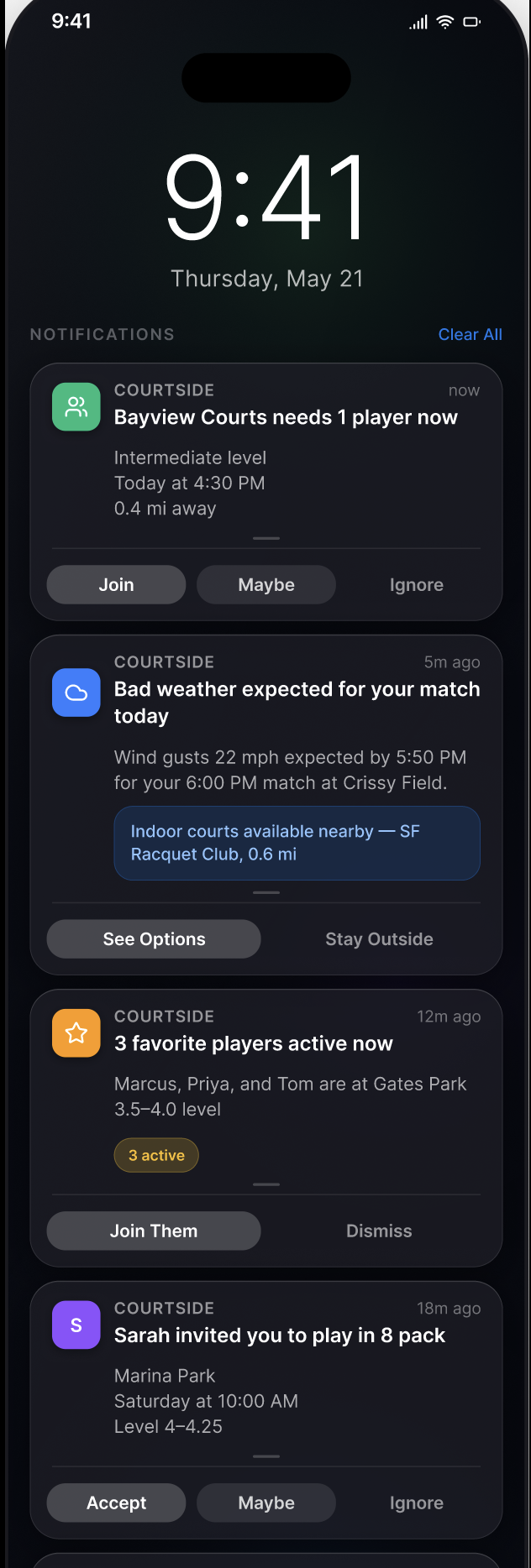
Design for change
Openings, cancellations and weather become actionable.
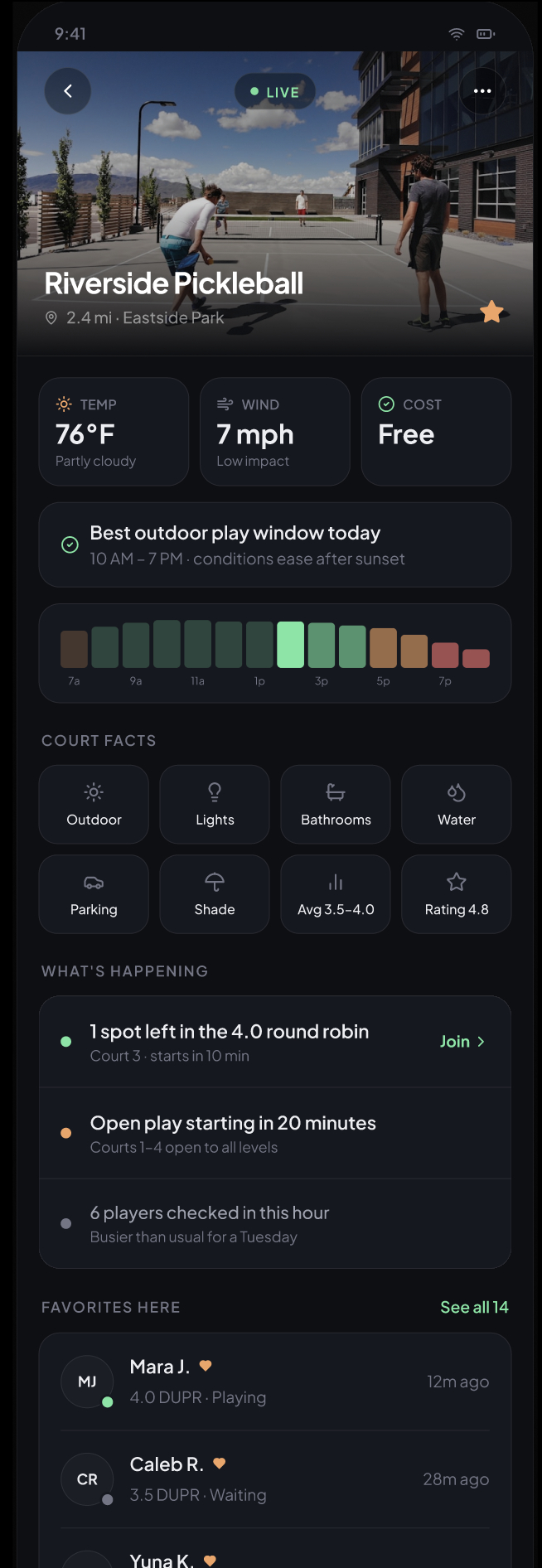
Add real-world context
Conditions and activity help answer whether it is worth going.
AI
Use AI to reduce work, not add another layer.
In my process
AI accelerated research synthesis, competitive analysis, edge-case exploration, product alternatives and the move from Figma toward a functional build.
In the product
AI is most useful where intent is fuzzy: understand what someone wants, make the interpretation visible and editable, then help surface relevant options.
AI handles ambiguity. Rules handle certainty. People confirm commitments.
04 · Test + Build
Move from concepts to real behavior.
About 15 formative reviews informed the current structure. I’m now moving into Lovable so complete flows can be tested against a functioning experience.
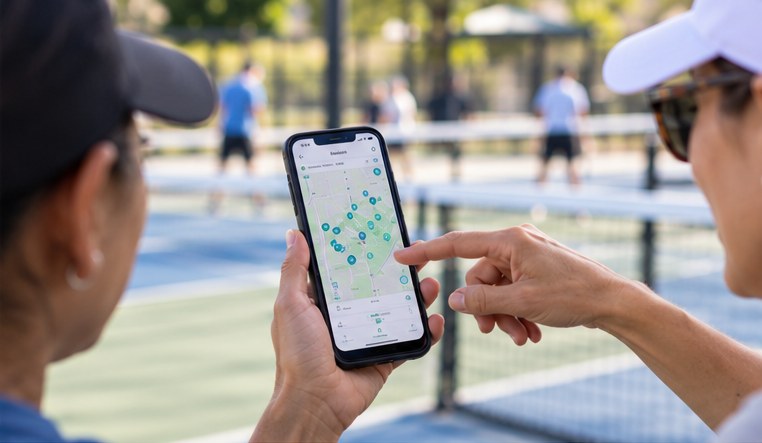
~15 formative reviews
Comprehension, findability and early interaction feedback informed the current structure.
Next
Task-based flow testing · real data and integrations · AI interaction testing · final UI refinement
- Researched
- Designed
- Evaluated
- Building
- Not launched
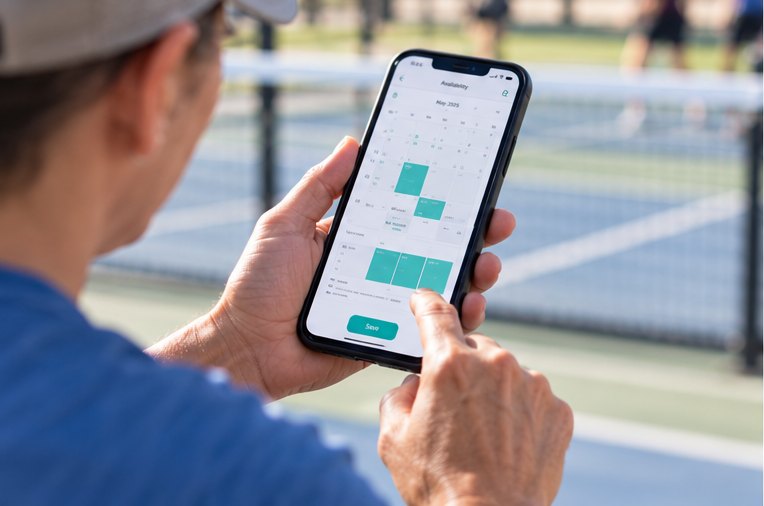

Illustrative testing context. Research findings and participant counts are based on actual interviews, survey responses and formative reviews.
What this work demonstrates
Finding the problem behind the interface.
The visible screens weren’t the whole problem. The larger friction lived between people, systems and changing information. My work was to identify that underlying problem, gather enough evidence to make decisions, and turn it into a direction worth testing before deeper investment.
Work with me
Have a product problem you're trying to figure out?
Tell me what's happening. We can figure out whether Express UX can help.