
SkyHome
Designing and validating a new smart-home experience before it reached the market.
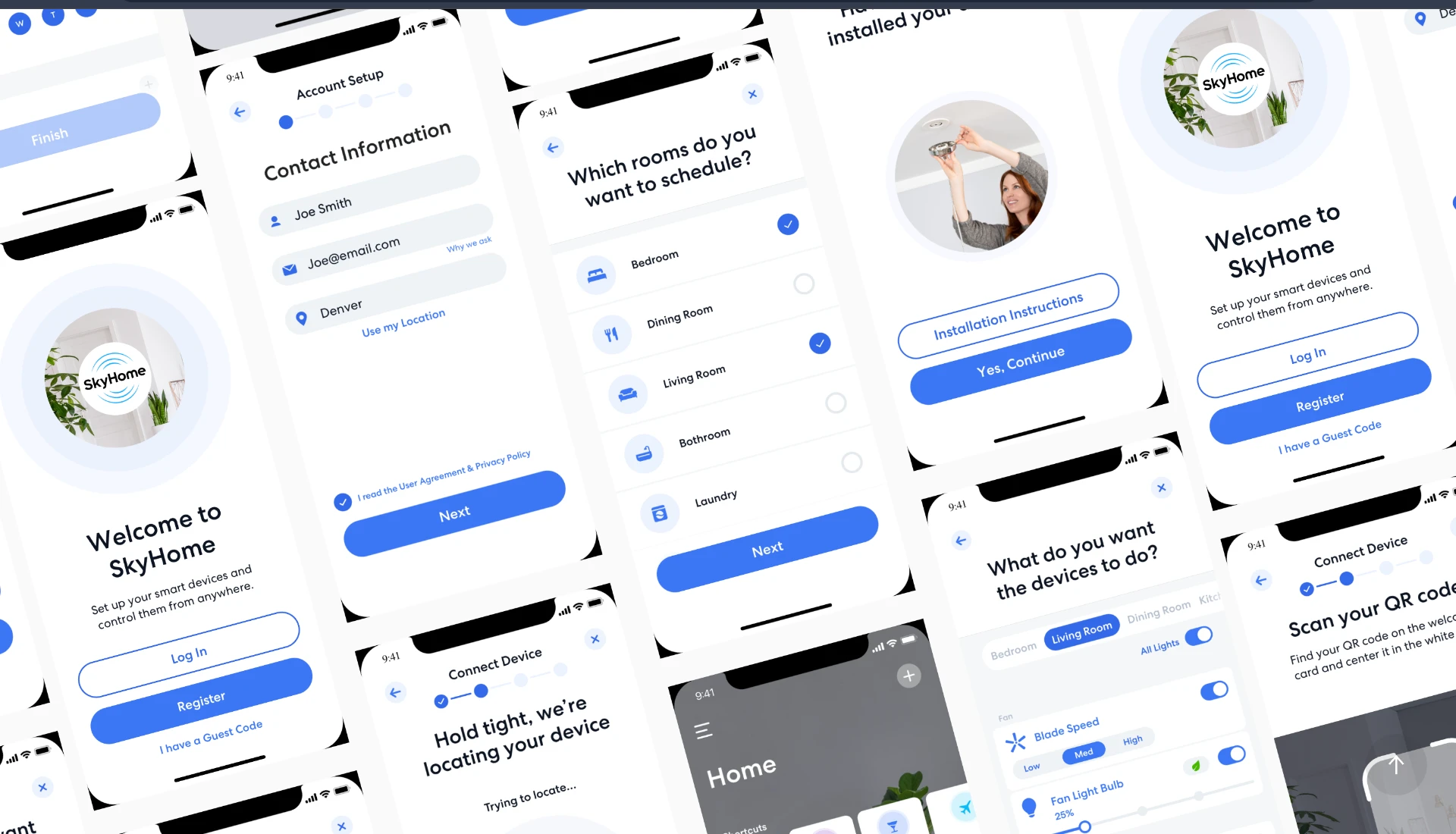
SkyHome was developing a new connected-lighting system that allowed people to safely swap fixtures using a new physical plug concept while controlling those devices through a mobile app. As Lead UX Designer, I worked across the physical and digital experience from early research through launch.
- Role
- Lead UX Designer — research through final product design
- Platforms
- iOS, Android + connected physical product
- Users
- Homeowners, with future office and hotel applications
- Timeline
- April 2022 – March 2023
- Scale
- 64 flows evaluated
The challenge
Testing a product before there were customers
SkyHome was still in prototype form and had not yet reached stores, which meant there was no established customer population to recruit from.
At the same time, the team needed to understand whether people could successfully install, connect, configure and control a completely new type of smart-home product.
Time and startup resources were limited, so the research approach had to be practical, fast and grounded in real use.
We needed evidence around
- Physical installation
- Device connection
- Registration
- Setup
- Control
- Error recovery
Getting real-world evidence
If there were no users yet, I had to create the testing environment
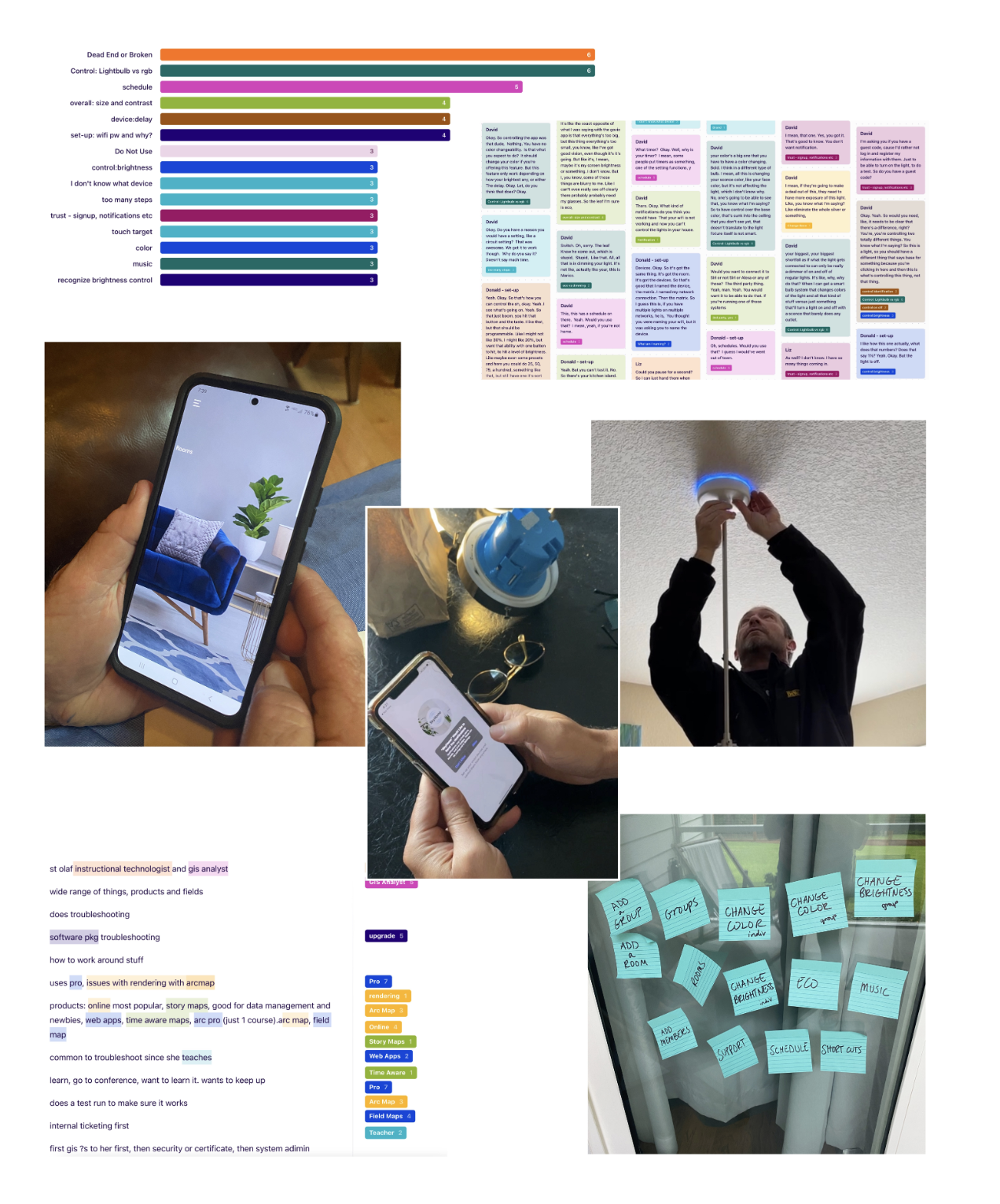
I recruited people across different ages and levels of technical ability and created a mobile testing setup that allowed me to bring the prototype directly into real homes.
Instead of evaluating the app by itself, I observed people completing the entire experience — from interacting with the physical fixture to registration, setup and control in the mobile app.
- Task-based usability testing
- Contextual observation
- Heuristic evaluation
- Card sorting
What I uncovered
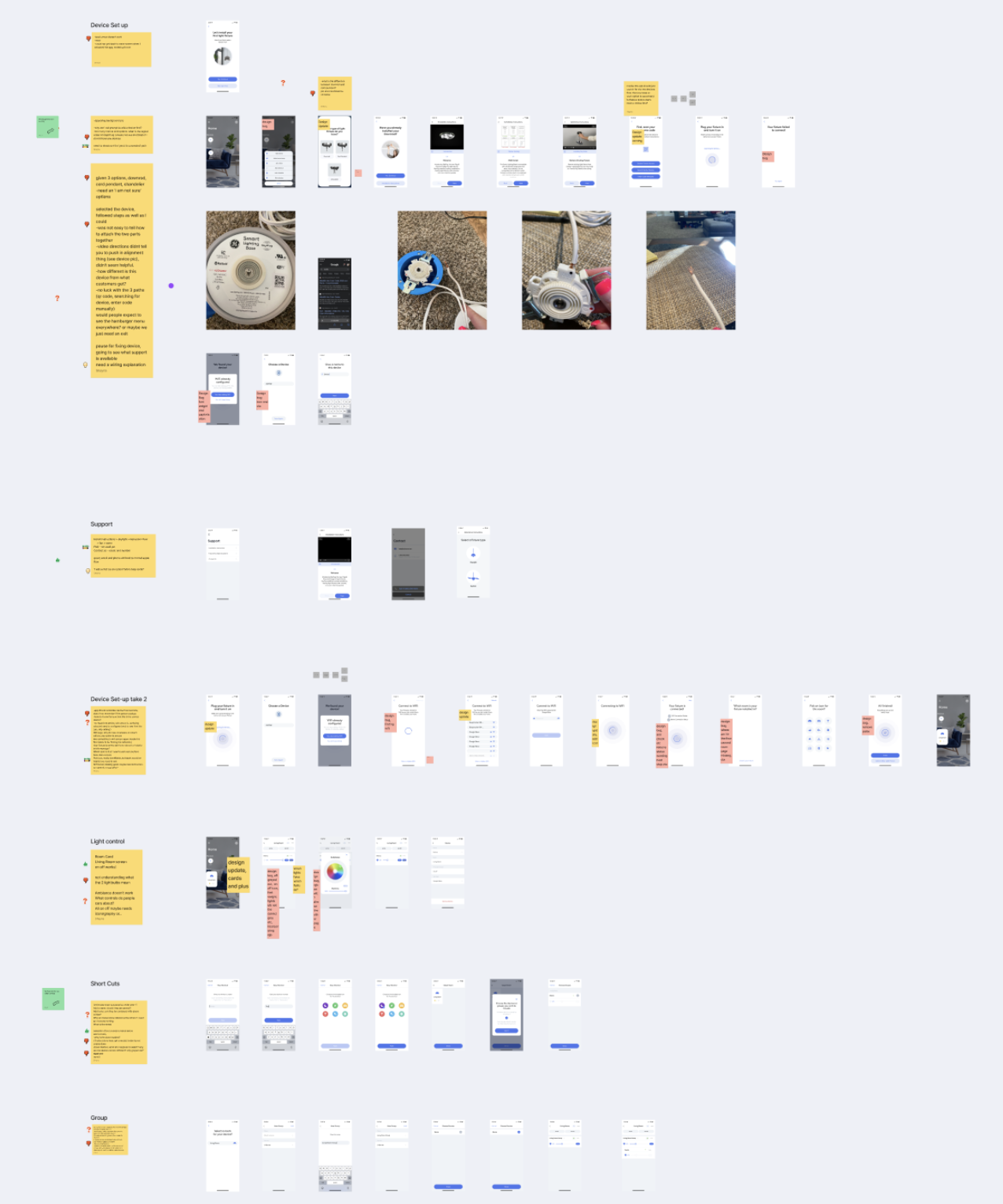
The evaluation exposed several significant roadblocks across the experience.
64 flows evaluated
Across installation, connection, registration, setup, control and error recovery.
Error prevention
Users needed clearer feedback and recovery when something did not go as expected.
Help and documentation
A new physical product required significantly clearer guidance than the prototype provided.
Accessibility and contrast
Testing exposed interface issues that needed to be corrected before the experience matured.
From evidence to product direction
Making the entire experience visible
Because the product was evolving quickly, I combined use cases, user flows and early sketches into a single visual.
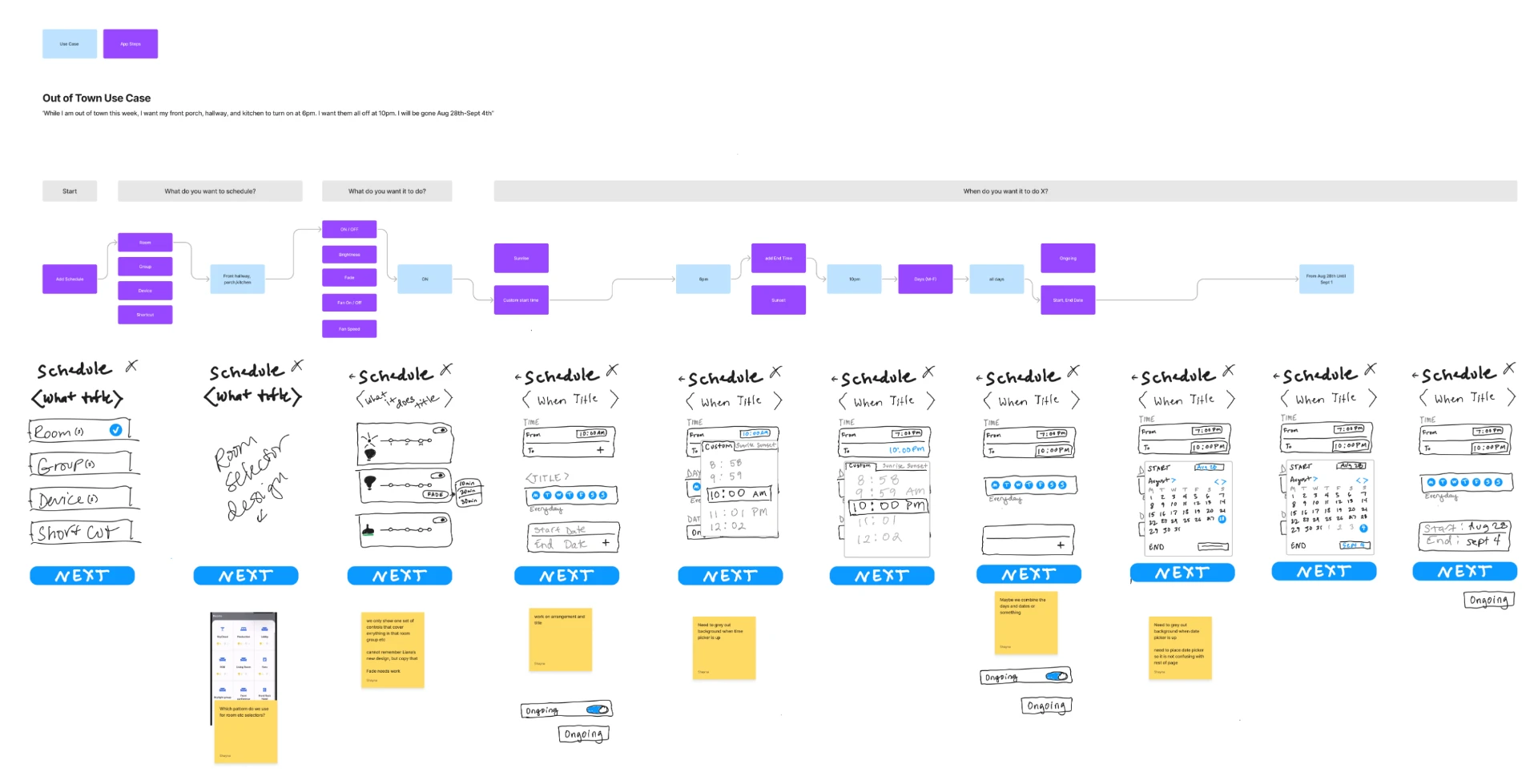
This allowed the team to see the experience from beginning to end, identify gaps before moving into higher fidelity design, and make decisions without losing sight of the user's task.
The team responded strongly to this format because it created a shared understanding of the product while still allowing the design to evolve quickly.
Building the experience
Turning the findings into the product
The mobile experience was designed around the real installation and device-control workflows uncovered during research—not around screens in isolation.
- Corrected the accessibility and contrast problems identified during testing.
- Applied Apple's Human Interface Guidelines across the mobile experience.
- Educated the team on HIG so decisions held up between design reviews.
- Created a starter design system, since formal design-system practice was new to the team.
- Designed around the real installation and device-control workflows observed in homes.
Impact
From prototype to launched product
The SkyHome app launched across multiple releases.
User reviews improved, and key product tasks became substantially shorter.
The iterative research and redesign helped move SkyHome from an early physical/digital prototype into a launched connected-product experience.
Issues identified during testing — including accessibility, contrast, guidance and error recovery — were improved as the product evolved.
The team also gained a reusable starter design system and clearer mobile interface standards to support future releases.
Work with me
Have a product problem you're trying to figure out?
Tell me what's happening. We can figure out whether Express UX can help.